Showing posts with label Sayings of the Salaf. Show all posts

Friday, 31 July 2026

Worship activates the Body


Worship activates the Body

العبادة تنشط البدن


Translated By Abbas Abu Yahya


Imam Ahmad collected what Wahab bin Munabih said with his chain of narrators:


من يتعبّد يزدد قوة، ومن يكسل يزدد فتوراً


‘Whoever worships increases in strength and whoever is lazy increases in weakness.’


Imam Ibn Katheer said:

” وهذا أمر مجرب؛ أن العبادة تنشط البدن وتلينه، وأن النوم يكسّل البدن فيقسّيه”.


‘This matter has been experienced, that worship activates the body and soothes. Sleep causes the body to become lazy so it becomes hard.’

[Al-Bidayah wa Nahayah 9/322]

[To read this text in Spanish language click here]


العبادة تنشط البدن


أخرج الإمام أحمد بسنده عن وهب بن منبه قال:

” من يتعبّد يزدد قوة، ومن يكسل يزدد فتوراً”.


قال الإمام ابن كثير:

” وهذا أمر مجرب؛ أن العبادة تنشط البدن وتلينه، وأن النوم يكسّل البدن فيقسّيه”.


[البداية والنهاية ٩/ ٣٢٢]


Taken from: https://followingthesunnah.com/worship-activates-the-body/

Thursday, 30 July 2026

“If you hear something from your brother ..."


“If you hear something from your brother ..."


Al-Bayhaqi reported: Ja’far ibn Muhammad, may Allah have mercy on him, said, “If you hear something from your brother that you reject, make an excuse for him up to seventy excuses. If you cannot do it, then say: Perhaps he has an excuse I do not know.”

Source: Shu’ab al-Imān 7853

عن البيهقي قَالَ قَالَ جَعْفَرُ بْنُ مُحَمَّدٍ رحمه الله إِذَا بَلَغَكَ عَنْ أَخِيكَ الشَّيْءُ تُنْكِرُهُ فَالْتَمِسْ لَهُ عُذْرًا وَاحِدًا إِلَى سَبْعِينَ عُذْرًا فَإِنْ أَصَبْتَهُ وَإِلا قُلْ لَعَلَّ لَهُ عُذْرًا لا أَعْرِفُهُ


Wednesday, 29 July 2026

Four Signs of the Wretched


Four Signs of the Wretched


It is reported that Al-Hasan Al-Basrī – Allāh have mercy on him – said:


Four signs of wretchedness are: [having] a hard heart, dry eyes [that never cry], extended hopes [about this life], and greed and keenness to amass worldly things (the dunyā).


Ibn Abī Al-Dunyā, Kitāb Al-Zuhd article 36.

Taken from: https://www.sayingsofthesalaf.net/four-signs-of-the-wretched/

[To read this text translated into Spanish Language, click here]

Friday, 9 January 2026

Secret Tears


 Secret Tears

Muhammad b. Wāsi’ said:

I have lived amongst men who were such that one of them would lie with his wife on the same pillow and his side of the pillow would be soaked with his tears under his cheek without his wife even noticing.


Ibn Abī Al-Dunyā, Al-Ikhlās wa Al-Nīyah (Sincerity and Intentions) p34.


Muhammad b. Wāsi’ Al-Azadī Al-Basrī was one of the famous and pious Tābi’īn. He reports from Anas b. Mālik – Allah be pleased with him – and others. He died in 123H, Allah have mercy on him.


Taken from: https://www.sayingsofthesalaf.net/secret-tears/

Friday, 19 December 2025

Seek refuge from the misguiding Fitna


 Seek refuge from the misguiding Fitna

Explained by Shaykh Salih Āli Shaykh


Translated by Rasheed ibn Estes Barbee


Imam Ahmad said, “So I asked Allah to grant me the memorization of the Quran, but I did not ask for it in a state of well-being. So, I did not memorize the Quran except while in prison chained up.


No doubt this is a tremendous statement that shows that the person should be mindful in their supplication and always ask Allah the Exalted, for pardon and wellbeing. When you ask your Lord, ask that it be granted with well-being, for you do not know what may happen to you. Perhaps what you seek may come only through an illness that incapacitates you, or through the loss of your children and family, leaving you alone in your home. Perhaps it may come only through an exile that you neither desire nor choose. Therefore, always ask your Lord that His blessings come with pardon and well-being.


Like this is seeking refuge with Allah from Fitna (trials), meaning the Fitna that causes misguidance. Therefore, when a supplicant prays that Allah the Exalted, protects them from Fitna, scholars have said that it is best to seek refuge from the Fitna that misleads people. One should say: "O Allah, I seek refuge in You from the Fitna that misleads" or "from the Fitna that leads people astray." Or one may say, "O Allah, I seek refuge in You from being led astray in my religion," or something similar. This is because good things can also be a Fitna. Family can be a trial, and wealth can be a trial. These are things that a person inevitably deals with—one must marry, have children, and possess wealth; these are necessities of life. However, these are forms of trials that come from good things, yet they may lead some people astray.


For this reason, a person should seek refuge in Allah the Exalted, from misleading trials.

[To read this text translated to Spanish Language, click here]

Taken from: https://mtws.posthaven.com/seek-refuge-from-the-misguiding-fitna-explained-by-shaykh-salih-ali-shaykh


Tuesday, 7 October 2025

Seize five things


Seize five things

Ibn Abi Haatim (Rahimahullah) said:

“I entered Damascus and came upon the students of hadeeth, and I passed by the circle of Qasim al-Joo’ee. I found a group sitting around him and he was speaking. Their appearance amazed me; and I heard him saying:


“Seize the benefit of five things from the people of your time:


1) When you are present, you are not known;

2) When you are absent, you are not missed;

3) When you are seen, your advice is not sought;

4) When you say something, your saying is not accepted;

5)When you have some knowledge, you are not given anything for it.


I also advise you with five matters:


1) When you are treated unjustly, do not behave unjustly;

2) When you are praised do not become happy;

3) When you are criticised, do not become upset;

4) When you are not believed, do not become angry;

5) If the people act deceitfully towards you, do not act deceitfully towards them.”


Ibn Abi Hatim said: So I took this as my benefit from Damascus”


[Related by Ibn al-Jawzi (Rahimahullah) in Sifatus-Safwaa (2/200]

[To read this text in Spanish Language, click here].

Taken from: https://salaficentre.com/2014/05/29/reminder-seize-the-benefit-of-five-things-from-the-people-of-your-time/

Thursday, 14 August 2025

Seeking Forgiveness For Abu Hurairah & his Mother*


Seeking Forgiveness For


 Abu Hurairah & his Mother*

استغفار لأبى هريرة ولأمه

Translated By Abbas Abu Yahya 


Imam al-Bukhari -Rahimahullaah said in the 'chapter Kindness to parents after they pass away' :


Musa narrated to us that he said, Salam bin Abi Mut'aee narrated to us from Ghalib who said that Muhammad bin Sireen said: 


'We were with Abu Hurairah one night and he said:

" اللهم اغفر لأبى هريرة ولأمى ولمن استغفر لهما."

'O Allaah forgive Abu Hurairah and his mother and whoever seeks forgiveness for them both.'


(Allaahumma ighfir liabee Hurairah wa leeummihi wa limun Astaghfir lahumma)


Muhammad said to me: 

'We seek forgiveness for them both so that we can enter into the Du'aa of Abu Hurairah.'


[Collected in al-Adab al-Mufrad p.23 Shaykh Albaani said it's isnaad is Saheeh.]

[To read this text in Spanish Language , click here]

Arabic Reference 


استغفار لأبى هريرة ولأمه

قال الإمام البخاري -رحمه الله تعالى- في باب بر الوالدين بعد موتهما:

حدثنا موسى قال: حدثنا سلام بن أبي مطيع عن غالب قال: قال محمد بن سيرين:

كُنَّا عند أبي هريرة ليلةً فقال:

" اللهم اغفر لأبى هريرة ولأمى ولمن استغفر لهما."

قال لي محمد: فنحن نَسْتَغْفِرُ لهما ؛ حتى نَدْخُلَ في دَعْوَةِ أبى هريرة.

قال الشيخ الألباني: صحيح الإسناد.

الأدب المفرد ص (23)


Taken from: https://followingthesunnah.com/seeking-forgiveness-for-abu-hurairah-his-mother/

Tuesday, 5 August 2025

Hadeeth - Ahlul Hadeeth vs Ahlul Ahwaa


Hadeeth - Ahlul Hadeeth vs Ahlul Ahwaa


It was narrated to us on the authority of Mu-mal that he said: “A Shaykh narrated a Hadeeth to me on the virtues of the Quran, chapter by chapter.”


So I asked him: “Who narrated this Hadeeth to you?”


He said: “A man in Madaa-in narrated it to me, he is alive.”


I traveled to him and asked him: “Who narrated this Hadeeth to you?”


He said: “A Shaykh in Waasit narrated it to me, he is alive.”


So I travelled to him, he said: “A Shaykh in Basrah narrated it to me.”


So I travelled to him, he said: “A Shaykh in Ba’badaan narrated it to me.”


So I travelled to him, he took me by the hand into a house, a group of Sufees were in it, with them was a Shaykh, he [the person who took my hand] said: “It is this Shaykh that narrated it to me.” I said: “O Shaykh, who narrated this Hadeeth to you?”


He responded: “Nobody narrated it to me, but I saw that the people were not interested in the Quran, so I fabricated these Ahadeeth for them so that it may turn their hearts to the Quran.” [Al ‘Iraaqee in ‘The Explanation of Muqadimat ibn as Salaah’]


[Al ‘Allaamah ‘Abdur Rahmaan al Mu’alimee comments:] This man [i.e. the traveler] must have travelled for about three months in order to verify this one Hadeeth. [‘The knowledge of the Narrators and its Importance.]


Al Bukhari narrated in 'At Taareekh al Awsat' on the authority of ‘Umar ibn Subh ibn ‘Imraan at Tameemee who said: “I fabricated a Hadeeth on the Khutbah of the Prophet - صلى الله عليه وسلم.”


Just as Maysarah ibn ‘Abd Rabihi al Faarisee admitted that he fabricated some Ahadeeth on the virtues of the Quran, and that he fabricated seventy Ahadeeth on the virtues of ‘Alee.


And just as Abu ‘Ismah Nooh ibn Abi Maryam who is known as ‘Nooh al Jaami’’ admitted that he fabricated some Ahadeeth on the virtues of the Quran, chapter by chapter, on the authority of ibn ‘Abbaas. [The Causes for Fabrication and the Categories of Fabricators]


[As Suyootee in ‘Tadreeb ar Rawee’ comments on a fabricated Hadeeth stating:] “This Hadeeth cannot be fabricated by a Muslim, the person accused of fabricating it is Muhammad ibn Shajjaa’, he was deviant in his religion…”


Shu’bah said concerning him: “I saw him, if he was given a Dirham he would fabricate fifty Ahadeeth.”


‘Abdullah ibn Yazeed al Muqree said: “A man from the people of innovations repented from his innovation, he then started saying; ‘Look at who you take Hadeeth from, for indeed if we had an opinion, we would turn it into a Hadeeth.’”


Abu al ‘Abbaas al Qurtubee, the author of ‘al Mufhim Sharh Saheeh Muslim’ stated: “Some of the Fuqahaa of the people of desires permitted that if a ruling is derived from a clear analogy, then it is permissible to attribute it to the Messenger - صلى الله عليه وسلم - verbally saying; the Messenger of Allah said …!!”


Al Hafidh Abu Ya’laa al Khaleelee stated in ‘Al Irshaad’; “The Raafidah fabricated Ahadeeth on the virtues of ‘Alee and Ahlul Bayt, about three hundred thousand Ahadeeth.”


Ibn al Qayyim comments in ‘Al Manaar al Muneef’: “Do not think this is farfetched, for if you research what they have from fabricated Ahadeeth you would find that it is as he stated.”


Continued…

_____________________________

[Translators note:] Look, may Allah preserve you, at the efforts extended by Ahlul Hadeeth in preserving the Sunnah for the Ummah of Muhammad – صلى الله عليه و سلم – in what state would we be in were it not for such efforts. Compare this to the efforts of Ahlut Tasawuf, the Shee’ah and the rest of the people of innovations in fabricating Ahadeeth into the Sunnah and what state we would be in had the affair been entrusted or left to them.


Taken from: https://subulassalaam.com/articles/article.cfm?article_id=88

[To read this text translated to Spanish Language, click here]

Tuesday, 29 July 2025

The Companion Hudhaifah Explaining How to Know Whether You Have Been Afflicted with Fitnah or Not


The Companion Hudhaifah Explaining How


 to Know Whether You Have Been 


Afflicted with Fitnah or Not


From Hudhaifah, Allaah be pleased with him, who said, “Whoever would like to know if he has been inflicted with fitnah or not, then let him look and see if he views something as ḥalāl now which he used to regard as ḥarām, or if he holds something to be ḥarām which he used to hold to be ḥalāl.”

Kunnāshah al-Bairūtī, vol. 1, p. 11.


Taken from: https://giftsofknowledge.net/2025/06/12/the-companion-hudhaifah-explaining-how-to-know-whether-you-have-been-afflicted-with-fitnah-or-not/

[To read this text translated to Spanish Language, click here]


Monday, 28 July 2025

“He Who Knows Allah Is Fully Preoccupied”


 “He Who Knows Allah Is Fully Preoccupied” 


🔸Mālik ibn Dīnār used to say:


مَنْ ‌عَرَفَ ‌اللَّهَ ‌فَهُوَ ‌فِي ‌شُغُلٍ ‌شَاغِلٍ،

وَيْلٌ لِمَنْ ذَهَبَ عُمُرُهُ بَاطِلًا

"He who knows Allah is fully preoccupied. Woe to the one whose life passes in vain."  


🔸 ʿAbd al-ʿAzīz ibn Abī Rawwād said to a man:

مَنْ لَمْ يَتَّعِظْ بِثَلَاثٍ لَمْ يَتَّعِظْ بِشَيْءٍ:

الْإِسْلَامُ، وَالْقُرْآنُ، وَالشَّيْبُ.

“He who is not admonished by three will not be admonished by anything: Islam, the Qur’an, and grey hair.”


Let Islam guide you. Let the Qur’an warn you. Let your grey hairs humble you.


Ibn Abī al-Dunyā, Abū Bakr ʿAbd Allāh ibn Muḥammad ibn ʿUbayd ibn Sufyān al-Baghdādī (d. 281 AH), Al-ʿUmr wa al-Shayb, Riyadh: Maktabat al-Rushd, 1st ed., 1412 AH, p. 56, 61.

[To read this text in English Language, please click here]

Taken from: https://t.me/umarquinn/891

Monday, 21 July 2025

When the Scholar Talks, and When He is Silent


When the Scholar Talks, and When He is Silent

It is reported that Al-Fuḍayl b. ʿAyyāḍ – Allāh have mercy on him – said:

The true faqīh (scholar) is the one who the fear of Allāh makes talk and the fear of Allāh makes silent. If he speaks it is by the Book and the Sunnah, and if he is silent, it is by the Book and the Sunnah. And if something is confusing to him and unclear, he withholds judgement and refers it back to whoever knows about it.


Ibn Baṭṭah, Ibṭāl Al-Ḥiyal p18, 19.

[ To read this text translated to Spanish Language click here]

Taken from: https://www.sayingsofthesalaf.net/when-the-scholar-talks-and-when-he-is-silent/

Wednesday, 16 July 2025

‘O’ Allāh, just as You have shielded my face from bowing to any but You..'


‘O’ Allāh, just as You have shielded

 my face from bowing to any but You..'


‘Abd-Allāh ibn Ahmad ibn Hanbal, [may Allah have mercy on them both], said:

“I would often hear my father say in his prostration:

‘O’ Allāh, just as You have shielded my face from bowing to any but You, then shield it from seeking aid from any but You.’“


Hilyat ul-Awliyā’ā, 9/233 | Al-Imām al-Asbahāni, [may Allāh have mercy on him]


Translation: Authentic Quotes

[To read this text translated into Spanish Language click here]


Monday, 30 June 2025

Imam al Bukhari's Memory


Imam al Bukhari's Memory


Narrated Abū Al-Azhār:

There were around 400 scholars of Hadīth in samarqand, and they all gathered to try cause Muḥammad b. Ismā'il al-Bukhāri to make a mistake.

So, in order to test him, they mixed the chains of sham with the chains of Iraq, and the chains of Iraq with the chains Sham, and the chains of the Haram with the chains of Yemen.

With all of this, they were unable to chase him to make a single mistake.


‎● {هادي الساري صفحة ٥١١}

[To read this text translated into Spanish Language click here]


Wednesday, 26 February 2025

The worldly-life is treacherous


The worldly-life is treacherous

Al-Hasan al-Basri, [may Allāh bestow mercy upon him], said: 

“[The worldly-life is treacherous], therefore be cautions, for it is like a snake, smooth to the touch, but its venom is deadly.”

Hilyat ul-Awliyā’a, 2/135 | Abu Naeem al-Asfahāni, [may Allāh bestow mercy upon him].


Translation: Authentic Quotes.

[To read this text translated into Spanish Language, click here]


Monday, 24 February 2025

Covering up the deficiencies of a woman who you want to propose to if she had repented


 Covering up the deficiencies of a woman who you want to propose to if she had repented

Translated By Abbas Abu Yahya


From Tariq bin Shihaab:


‘A man was asked for his daughter’s hand in marriage and she had previously committed a bad deed which he knew about.

So, he came to Umar and mentioned it to him, Umar said:

‘Now what have you seen from her?’

The man said: ‘I have not seen anything except good! ‘

Umar said:

                   «فَزَوِّجْهَا وَلَا تُخْبِرْ».

   ‘Marry her and do not tell anyone.’


[Collected by AbdurRazzaq in al-Musanaf no. 10689 & it is authentic]

[To read this text translated into Spanish Language, click here]


● قال عَبْد ُ الرَّزَّاقِ في مصنفه (١٠٦٨٩) عَنِ الثَّوْرِيِّ، عَنْ قَيْسِ بْنِ مُسْلِمٍ، عَنْ طَارِقِ بْنِ شِهَابٍ:


أَنَّ رَجُلًا خَطَبَ إِلَيْهِ ابْنَةً لَهُ، وَكَانَتْ قَدْ أَحْدَثَتْ لَهُ،  فَجَاءَ إِلَى عُمَرَ فَذَكَرَ ذَلِكَ لَهُ فَقَالَ عُمَرُ:

«مَا رَأَيْتَ مِنْهَا؟»

قَالَ: مَا رَأَيْتُ إِلَّا خَيْرًا !


قَالَ: «فَزَوِّجْهَا وَلَا تُخْبِرْ».


[صحيح]


قَوْلُهُ: مَا رَأَيْتُ مِنْهَا إِلَّا خَيْرًا يَعْنِي: بَعْدَ الْحَدَثِ.


Text in English and Arabic taken from: https://followingthesunnah.com/covering-up-the-deficiencies-of-awoman-who-you-want-to-propose-to-if-she-had-repented/

Saturday, 7 December 2024

Speaking About That Which Concerns You


Speaking About That Which Concerns You


Malik Bin Dinar [رحمه الله] said:


«إذَا رَأيتَ قَسَاوَةً فِي قَلبِكَ ، ووَهَنًا فِي بَدَنِكَ ، وحِرمَانًا فِي رِزقِكَ ، فَاعلَم أنَّكَ تَكَلَّمتَ فِيمَا لَا يَعنِيكَ.»


❝When you see that there is hardness in your heart, weakness in your body and you have been prohibited from your provisions, then know that you have spoken about something which does not concern you.❞


[Faydh Al-Qadeer, (1/286) | Translated By Abbas Abu Yahya Miraath Al-Anbiyya]

[For reading this text in Spanish Language, click here]

Saturday, 2 December 2023

Fast Times


Fast Times

It is reported that ʿAbdullāh b. Al-Mubārak – Allāh have mercy on him – said:


How fast these days are in doing away with our lifespans, and how fast this year is in doing away with its months, and how fast this month is in doing away with its days.


Ibn Abī Al-Dunyā, Al-ʿUmr was Al-Shayb article 25.


Taken from: https://www.sayingsofthesalaf.net/fast-times/

Wednesday, 4 October 2023

Remembering Your Sins


  Remembering Your Sins

It is reported that Masrūq – Allāh have mercy on him – said:

Everyone should have times when they sit alone, remember their sins, and thus seek [Allāh’s] forgiveness for them.

Aḥmad b. Ḥanbal, Al-Zuhd article 2038.


Taken from: https://www.sayingsofthesalaf.net/remembering-your-sins/

Friday, 29 September 2023

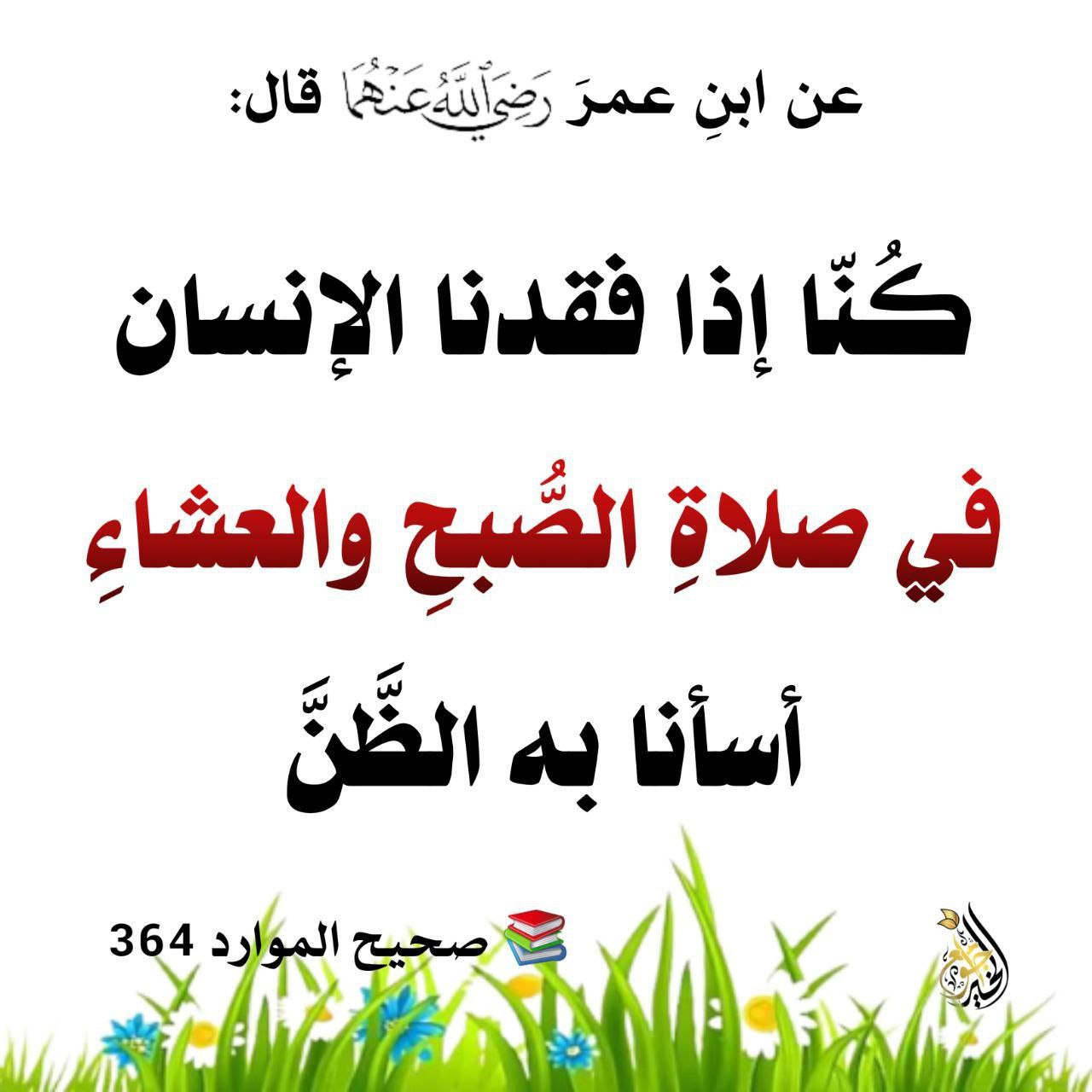
If someone was absent during the Fajr and ‘Eshā’a prayers


If someone was absent during the Fajr and ‘Eshā’a prayers

‘Abd-Allāh ibn ‘Umar, [may Allāh be pleased with him and his father], said:

“If someone was absent during the Fajr and ‘Eshā’a prayers, we assumed the worst about them.”

Saheeh al-Mawārid, 364 | Shaykh al-Albāni رحمه الله | Saheeh

Translation: Authentic Quotes


Thursday, 28 September 2023

Four of the Worst of the Major Sins


Four of the Worst of the Major Sins


ʿAbdullāh b. Masʿūd – Allāh be pleased with him – said:


The worst of the worst (major) sins are: to associate partners with Allāh, to lose hope of the aid of Allāh, to despair of the mercy of Allāh, and to feel safe from the plans of Allāh.


Al-Ṭabarī, Al-Tafsīr (Qurān 4: 31). Graded ṣaḥīḥ by Ibn Kathīr in his tafsīr of the same verse.


Taken from: https://www.sayingsofthesalaf.net/four-of-the-worst-of-the-major-sins/