Showing posts with label as-Sa'di. Show all posts

Monday, 19 January 2026

Your Children


 Your Children 


Shaykh ‘Abd al-Rahman ibn Nasir al-Sa‘di (رحمه الله ) said:

“The people most deserving of your kindness and most entitled to your good treatment are your children, for they are trusts that Allah has placed with you. He has entrusted you with raising them in a righteous manner—nurturing both their bodies and their hearts.

Everything you do for them in this regard, whether small or great, is part of fulfilling your obligation and is among the best deeds that draw you closer to Allah. So strive in this and seek its reward from Allah.

Just as when you feed them, clothe them, and take care of their physical upbringing you are fulfilling a duty and are rewarded for it—then even more so when you nurture their hearts and their souls with beneficial knowledge, sound understanding, guiding them to noble character, and warning them against its opposites.”

📚 [Bahjat Qulūb al-Abrār wa Qurrat ‘Uyūn al-Akhyār, p.154]


Monday, 2 October 2023

AN ACT OF INJUSTICE


AN ACT OF INJUSTICE 


Kindness is only kindness when it does not involve doing a forbidden act or neglecting to do an obligatory one. 


If a kindness involves abandoning justice, it becomes oppression. This is why showing favouritism towards some children above others and to some wives above others is forbidden even though it might be kindness towards the one being preferred and favoured, because it is an act of injustice. 


Book: Lessons Learnt From The Story Of Yūsuf (عليه السلام)

By Shaykh 'Abd ur-Rahmān ibn Nāsir as-Sa'dī 

Translated by Abū 'Abdillāh Nūr ad-Dīn 

DuSunnah Publications

P. 122, 123

Thursday, 10 February 2022

FOCUS ON THE AFFAIRS OF THE MOMENT


FOCUS ON THE AFFAIRS 

OF THE MOMENT


Grief (huzn) is usually over past events that you can neither bring back nor rectify. Anxiety (hamm) is usually fear and concern over what will come in the future. Therefore a person should concentrate his energy and attention in the betterment of his existing events, and his present moments. Focusing on the affairs of the moment is the necessary cause of them being accomplished, and is what gets rid of grief and anxiety from the heart. 


Book: 8 Steps To Happiness 

Awakening The Inner Self in Pursuit of Personal Change 

By Shaykh Abū 'Abdu-r-Rahmān Nāsir as-Sa'dī 

Translated from the original arabic 

Dār as-Sunnah Publishers 

P. 26


[To read this text in Spanish language click here]


Sunday, 16 January 2022

EASY FOR THE ONE FOR WHOM ALLĀH MAKES IT EASY

 EASY FOR THE ONE FOR 

WHOM ALLĀH MAKES IT EASY 


Imām al-Sā'dī (رحمه الله) wrote,


"For abandoning aiding one's own soul through speech or action is from the most difficult of affairs upon it. 

And having patience upon harm, pardoning, forgiving and returning (harm) with benevolence is even harder. 

However, it is easy for the one for whom Allāh makes it easy, and (for the one) who strives against his soul to acquire this quality and who seeks aid from Allāh upon that. 

Then when the servant tastes the sweetness of that and finds its (positive) effects, he will adopt it with an open chest and will relish it."


* Taysīr al-Karīm al-Rahmān in Al-Majmū'ah al-Kāmilah (6/625). 


Book: A Principle Regarding Patience and Gratitude

By Shaykh al-Islam ibn Taymiyyah

Translated by Abu Iyaad Amjad Rafīq

Hikmah Publications

P. 34


[To read this text in Spanish language click here].


Sunday, 9 January 2022

Do Not Grieve Over The Past


 Do Not Grieve Over The Past


Shaykh AbduRahmaan As-Sa'adi [رحمه الله] said:


❝Do not grieve over past matters which have not been destined, from ill health, or loss of wealth or a worldly matter, etc.

Your concern should be with rectification of actions on the day. 

Since a person is living in the moment. He should not be saddened for what has passed. Also he should not research into the future where that research would not be of any benefit.

It is upon you to be truthful, fulfill your contracts, keep to one's promises and justice in all dealings.

Fulfilling rights completely and perfectly with a tranquil soul and with truthful pure Eemaan.

 Busy yourself with your own mistakes and your matters, rather than the mistakes of the people and their matters.

Deal with everyone according to their situation and condition, whether he is a senior, or youngster, male or female, a leader or a follower.

Be gentle and merciful to everyone even animals and livestock, since indeed Allaah is merciful to his merciful worshippers.

Be balanced in all your matters, and open up your mind to every religious and worldly benefit.❞


[Majmoo Mualifaat As-Saadi, (21/258) | Translated By Abbas Abu Yahya Miraath Al-Anbiyya]


[To read this text in Spanish language click here]


Wednesday, 5 January 2022

Repelling Trials


Repelling Trials 


Shaykh ‘Abd Ar-Rahmān Ibn Nasr As-Sa’adi رحمه الله said:


“Du’ā is the weapon for the strong and the weak. It is the fortress of the Prophets and the chosen ones and with Du’ā they repel all trials.”


[Majmū’ Mu’alafatihi, 23/736. Translated By Abbas Abū Yahya]


[To read this text in Spanish click here]


Friday, 24 December 2021

HER FAITH KEPT HER FIRM


HER FAITH KEPT HER FIRM 


The mother of Moses, when the river bore him away, felt the loss of her son so acutely that it overcame her heart, and were it not for the fact that Allāh established faith in her heart and her sure knowledge that the promise of Allāh was true, she would surely have openly broadcast her calamity. However her faith kept her firm at the onset of calamity, consoled her, and strengthened her.


The Prophet (ﷺ) said in his great legacy [to Ibn 'Abbās], 


"Know Allāh in times of ease, He will know you in times of hardship."


* Recorded by al-Tirmidhī [#2516] and Ahmad [1/293, 303, 307] and it is sahīh. 


Book: The Tree Of Faith

By Al-Allamah 'Abdur-Rahman al-Sa'di

Translated by Abū Rumaysah 

P. 72

Wednesday, 24 November 2021

OPPRESSION


OPPRESSION 


Kindness is only kindness when it does not involve doing a forbidden act or neglecting to do an obligatory one. 


If a kindness involves abandoning justice, it becomes oppression. This is why showing favouritism towards some children above others and to some wives above others is forbidden even though it might be kindness towards the one being preferred and favoured, because it is an act of injustice. 


Book: Lessons Learnt From The Story Of Yūsuf (عليه السلام)

By Shaykh 'Abd ur-Rahmān ibn Nāsir as-Sa'dī 

Translated by Abū 'Abdillāh Nūr ad-Dīn 

DuSunnah Publications

P. 122, 123

Monday, 26 July 2021

WHAT ARE THE RIGHTS OF THE MUSLIMS ON YOU?


WHAT ARE THE RIGHTS OF 

THE MUSLIMS ON YOU?


Allaah the Most High says:


إِنَّمَا ٱلْمُؤْمِنُونَ إِخْوَةٌ 


"The believers are but brothers (to each other)" ¹


So it is obligatory to take them as brothers, meaning:


• That you love for them what you love for your own self;


• That you dislike for them what you dislike for your own self;


• And that you do your very best to help them, correct what is between them, bring their hearts together, and unite them upon the Truth.


The Prophet (ﷺ) said:


Every Muslim is a brother to another Muslim; he does not oppress him, forsake him, lie to him, or degrade him.²


it is also obligatory to give every one of the Muslims their specific rights, whether they are parents, relatives, neighbors, friends or coworkers. 

__________________________________

¹ Soorah Al-Hujuraat (49):10 

² Saheeh Muslim (#6487) 


Book: Essential Questions & Answers Concerning The Foundation of Eemaan & Obstacles in the Path of Eemaan

By Shaykh 'Abdur-Rahmaan Ibn Naasir As-Sa'dee

Translated by Moosa Richardson

T•R•O•I•D Publications 

P. 41, 42

Wednesday, 12 June 2019

Patience, Prayer, Firmness and Listening to Upright Scholars Required When Oppressors Become Extremely Oppressive: [Lessons to Learn From The Behaviour of Ancient Criminals Prior to Their Wretched End]


Patience, Prayer, Firmness and Listening to 

Upright Scholars Required When Oppressors 

Become Extremely Oppressive: [Lessons to 

Learn From The Behaviour of Ancient 

Criminals Prior to Their Wretched End]


In The Name of Allaah, The Most Merciful, The Bestower of Mercy.

[يَـٰقَوۡمِ إِن كُنتُمۡ ءَامَنتُم بِٱللَّهِ فَعَلَيۡهِ تَوَكَّلُوٓاْ إِن كُنتُم مُّسۡلِمِينَ – And Musa (Moses) said: “O my people! If you have believed in Allah, then put your trust in Him if you are Muslims (those who submit to Allah’s Will). [10:84]; Meaning: Place your trust in Allaah, return to Allaah by asking for steadfastness, aid, assistance, victory etc. Then Allaah [The Most High] says that Moosaa’s [alayhis-salaam] people replied, saying: [فَقَالُواْ عَلَى ٱللَّهِ تَوَكَّلۡنَا رَبَّنَا لَا تَجۡعَلۡنَا فِتۡنَةً۬ لِّلۡقَوۡمِ ٱلظَّـٰلِمِينَ – They said: In Allah we put our trust. Our Lord! Make us not a trial for the folk who are Zalimun (polytheists and wrong-doers (10:85)]; Meaning: Do not allow them to overpower us and thus we are put to trial in the affairs of our religion, or that they are given victory and thus we are put to trial and they say, “Had they (i.e. the believers) being upon the truth, they would not have been defeated. [وَنَجِّنَا بِرَحۡمَتِكَ مِنَ ٱلۡقَوۡمِ ٱلۡكَـٰفِرِين – And save us by Your Mercy from the disbelieving folk. (10:86)]; Meaning: Save us from their evil, so that we can practice our religion in the correct manner it should be practised- by establishing its laws and being able to manifest it without being opposed or prevented.

Then Allaah [The Most High] says that He commanded Moosaa and Haaroon [alayhimas-salaam], saying: [ وَأَوۡحَيۡنَآ إِلَىٰ مُوسَىٰ وَأَخِيهِ أَن تَبَوَّءَا لِقَوۡمِكُمَا بِمِصۡرَ بُيُوتً۬ا وَٱجۡعَلُواْ بُيُوتَڪُمۡ قِبۡلَةً۬ وَأَقِيمُواْ ٱلصَّلَوٰةَ‌ۗ وَبَشِّرِ ٱلۡمُؤۡمِنِينَ – And We inspired Musa (Moses) and his brother (saying): “Take dwellings for your people in Egypt, and make your dwellings as places for your worship, and perform As-Salat (Iqamat-as-Salat), and give glad tidings to the believers].

So when the trial became severe and they faced increased persecution at the hands of Fir’awn and his chiefs, Allaah [The Most High] commanded Moosaa and Haaroon (alayhimas-salaam] to command the believers to take dwellings in which they can perform the prayer when they are unable to perform it their places of worship; for indeed the prayer is an aid in all affairs. And besides this, they were given glad tidings that they will be given victory and that a time is coming in which they will be able to manifest their religion; for ease will come after a period of hardship.

[Source: An Excerpt from ‘Tayseer Al-Kareem Ar-Rahmaan Fee Tafseer Kalaam Al-Mannaan’ by Imaam As-Sadi (rahimahullaah)]

[To read this text in Spanich click here (para leer este texto en castellano hacer click aquí]


Taken from: https://salaficentre.com/2019/04/patience-prayer-firmness-and-listening-to-upright-scholars-required-when-oppressors-become-extremely-oppressive-lessons-to-learn-from-the-behaviour-of-ancient-criminals-prior-to-their-wretched-end/

Sunday, 23 October 2016

CAREFULLY CHOOSING WORDS [IN DIFFERENT CIRCUMSTANCES] WHEN ADDRESSING OTHERS – AN EXCELLENT EXAMPLE FROM PROPHET IBRAAHEEM (ALAYHIS-SALAAM)


CAREFULLY CHOOSING WORDS [IN DIFFERENT CIRCUMSTANCES] WHEN 
ADDRESSING OTHERS – AN EXCELLENT 

EXAMPLE FROM PROPHET IBRAAHEEM (ALAYHIS-SALAAM)

Allaah (The Most High) said:


إِذۡ قَالَ لِأَبِيهِ يَـٰٓأَبَتِ لِمَ تَعۡبُدُ مَا لَا يَسۡمَعُ وَلَا يُبۡصِرُ وَلَا يُغۡنِى عَنكَ شَيۡـًٔ۬ا (٤٢) يَـٰٓأَبَتِ إِنِّى قَدۡ جَآءَنِى مِنَ ٱلۡعِلۡمِ مَا لَمۡ يَأۡتِكَ

When he said to his father: “O my father! Why do you worship that which hears not, sees not and cannot avail you in anything? “O my father! Verily! There has come to me of knowledge that which came not unto you. [19:42-43]

Imaam Sadi (rahimahullaah) said: Look at this speech that is attractive to the hearts. He [Ibraaheen (alayhis-salaam) did not say to his father, ‘’Indeed, you are a Jaahil (an ignorant person) lest his father is turned away due to rough speech, rather [Allaah said that Ibraaheem said]:

فَٱتَّبِعۡنِىٓ أَهۡدِكَ صِرَٲطً۬ا سَوِيًّ۬ا (٤٣) يَـٰٓأَبَتِ لَا تَعۡبُدِ ٱلشَّيۡطَـٰنَ‌ۖ إِنَّ ٱلشَّيۡطَـٰنَ كَانَ لِلرَّحۡمَـٰنِ عَصِيًّ۬ا (٤٤) يَـٰٓأَبَتِ إِنِّىٓ أَخَافُ أَن يَمَسَّكَ عَذَابٌ۬ مِّنَ ٱلرَّحۡمَـٰنِ فَتَكُونَ لِلشَّيۡطَـٰنِ وَلِيًّ۬ا

So follow me. I will guide you to a Straight Path. “O my father! Worship not Shaitan (Satan). Verily! Shaitan (Satan) has been a rebel against the Most Beneficent (Allah). “O my father! Verily! I fear lest a torment from the Most Beneficent (Allah) overtake you, so that you become a companion of Shaitan(Satan) (in the Hell-fire).” [19:43-45] [Ref 1]

A Benefit from Imaam Ash-Shanqeetee (rahimahullaah) regarding harshness and softness in their appropriate places; he said:

It is idiocy and an offence to (apply) harshness in a place where leniency is to be (applied), and it is weakness and spiritlessness to apply leniency in a place where harshness is to be applied.  If it is said: Apply leniency, say: Leniency should be in its place, for the leniency of a young man in other than its place is ignorance.”  [Ref 2]

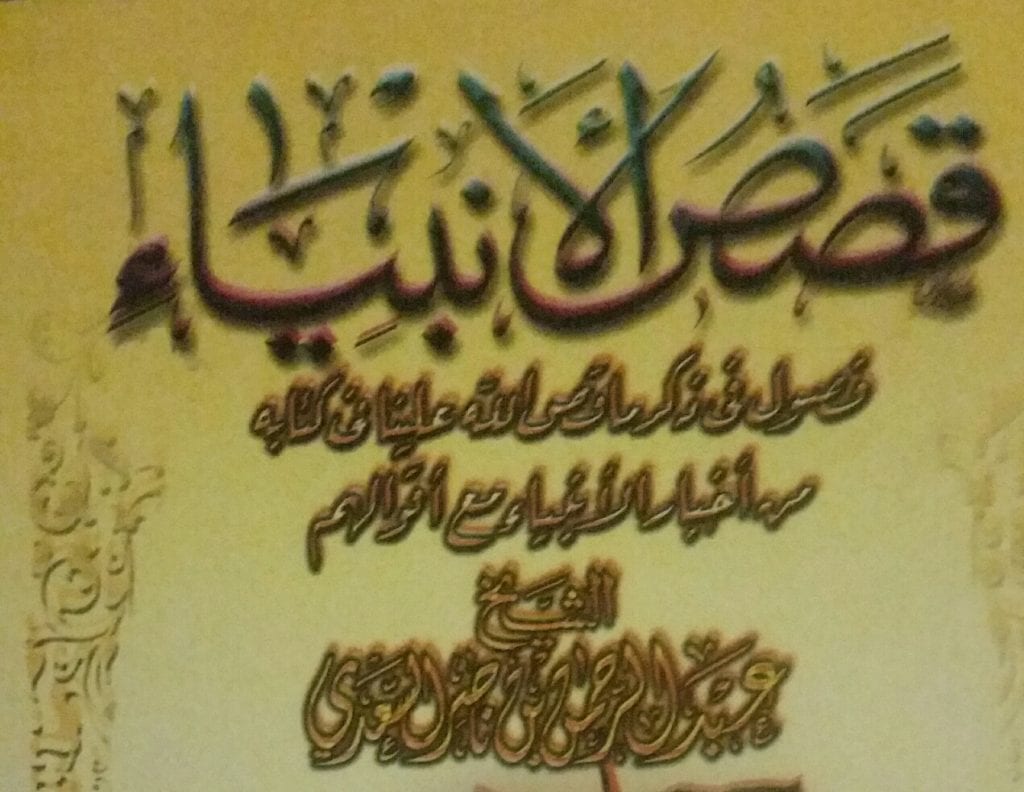
[Ref 1: Qisas Al-Anbiyaa’ page 45’ by Imaam Sadi (rahimahullaah)]:

sadi1

sadi2

[Ref 2: Al-Islaam Deenu Kaamilu’ by Imaam Ash-Shanqeetee (rahimahullaah) page 12]


[To read this in spanish, click here]

Source: http://www.salaficentre.com/2016/10/carefully-choosing-words-different-circumstances-addressing-others-excellent-example-prophet-ibraaheem-alayhis-salaam/

Tuesday, 27 October 2015

Praying behind the one who smokes


Praying behind the one who smokes

Question:

What is the ruling of the prayer behind the one who smokes?


Answer:

If you can find other than him as an Imaam then do not pray behind him, and if you cannot but find an Imaam who smokes then it is an obligation that you pray behind him – and do not pray by yourself – and Allaah knows best.


Shaykh `Abdur-Rahmaan as-Sa`dee  رحمه الله

Al-Majmoo'ah al-kaamilah li-muallafaat Ash-Shaikh 'Abdir-Rahmaan As-Sa'dee vol 7 page 120

[To read this article in spanish click here]

Translated by Aboo Haatim Muhammad Farooq

Source: http://www.fatwaislam.com/fis/index.cfm?scn=fd&ID=664

Friday, 25 September 2015

A child leading the elder in prayer


A child leading the elder in prayer

Question:

What is the ruling of the child leading the one who is mature/of age in prayer?


Answer:

It is correct, that the leading of the child for the one who is mature/of age is correct in the obligatory prayer as well as the optional, and it is a narration which has come from (Imaam) Ahmad – many of the companions (of the madhab) chose this (opinion).


Shaykh `Abdur-Rahmaan as-Sa`dee

Al-Majmoo'ah al-kaamilah li-muallafaat Ash-Shaikh 'Abdir-Rahmaan As-Sa'dee vol 7 page 120

Translated by Aboo Haatim Muhammad Farooq

Source: http://www.fatwaislam.com/fis/index.cfm?scn=fd&ID=665


Wednesday, 18 March 2015

It is from the Mercy of Allaah that the Qur'aan is still with us


It is from the Mercy of Allaah
that the Qur'aan is still with us

بـسـم الله والحـمـد لله والـصلاة والـسـلام عــلى رسـول الله، وبـعـد

Allaah تعالى says:

﴿أَفَنَضْرِبُ عَنكُمُ الذِّكْرَ صَفْحاً أَن كُنتُمْ قَوْماً مُّسْرِفِينَ ﴾

{Should We then take this Reminder away from you and ignore you because you are a nation who has transgressed all limits?} [Surah al-Zukhruf (43):5]


Imaam Ibn Katheer رحمه الله commented on this Aayah:

{Shall We then take away the Reminder (this Qur’aan) from you, because you are a nation who has transgressed all limits?} means: “do you think that We will forgive you and not punish you, when you do not do as you have been commanded?” This was the view of Ibn `Abbaas رضي الله عنهما, Abu Saaleh, Mujaahid and al-Suddi, and was the view favored by Ibn Jareer.

{Shall We then take away the Reminder (this Qur’aan) from you} Qataadah said: “By Allaah, if this Qur’aan had been taken away when the first generations of this Ummah rejected it, they would have been doomed, but Allaah by His mercy persisted in sending it and calling them to it for twenty years, or for as long as He willed.”

What Qataadah said is very good, and his point is that Allaah, by His grace and mercy towards His creation, did not stop calling them to the truth and to the wise Reminder, i.e., the Qur’aan, even though they were heedless and turned away from it. Indeed, He sent it so that those who were decreed to be guided might be guided by it, and so that proof might be established against those who were decreed to be wretched.

--end of quote


Shaikh `Abdul Rahmaan bin Nasr al-Sa`dee رحمه الله said:

{Shall We then take away the Reminder (this Qur’aan) from you} meaning: “Should We turn away from you, and stop the revelation of the Dhikr (The Qur’aan) from you, and pay no attention to you because of your rejection and refusal to implement it? Rather, We will reveal it for you and make plain for you everything in it (so that you may understand it). So if you believe in it and are guided, then it is for your own success. But if you don’t, then the proof will be established against you, for you have been made aware of your affairs.

--end of quote


Abu Hurairah رضي الله عنه said: The Messenger of Allaah صلى الله عليه وسلم said: “Allaah said: {The son of Aadam denied Me and he had no right to do so. And he reviled Me and he had no right to do so. As for his denying Me, it is his saying: He (Allaah) will not remake me as He made me at first - and the initial creation [of him] is no easier for Me than remaking him. As for his reviling Me, it is his saying: Allaah has taken to Himself a son, while I am the One, the Everlasting Refuge. I begot not nor was I begotten, and there is none comparable to Me.}” [Saheeh al-Bukhaaree (4975)]

[To read this article in spanish click here]

Source

Saturday, 22 December 2012

Imam As-Sa'di: Commentary on the verse {indeed all the believers are brothers…..}


Imam As-Sa'di: Commentary on the verse {indeed all the believers are brothers…..} [AlHujurat: 10]
 

Allah the Most High says:
إِنَّمَا الْمُؤْمِنُونَ إِخْوَةٌ فَأَصْلِحُوا بَيْنَ أَخَوَيْكُمْ وَاتَّقُوا اللَّهَ لَعَلَّكُمْ تُرْحَمُونَ

indeed all the believers are brothers. So make reconciliation between your brothers, and fear Allâh, that you may receive mercy. (Al-Hujurat 49:10)

Imaam A-Sa'di said:

"This is a bond that Allah has concluded between the believers, that if there is an individual whoever he may be, whether in the east of earth or its west, that has belief in Allah and his Angels and his Books and his Messengers and the Last Day then indeed he is a brother of the believers, a brotherhood that necessitates that the believers love for him what they love for themselves and that they dislike for him what they dislike for themselves, and due to this the Prophet (Salaa Allaahu Alaihi Wa Salam) said ordering the believers with brotherhood based on Eeman:

[و لا تحَاسَدُوا و لا تَنَاجَشُوا و لا تَبَاغَضُوا و لا تَدَابَرُوا و كُونُوا عِبَاد الله إِخْوَانَاً و , المُسلِم أَخُو المُسْلِم لايَظلِمُهُ و لا يَخذِلُهُ و لا يَكذِبُهُ)) [متفق عليه))

"Do not envy each other. Do not inflate prices on one another. Do not hate one another. Do not abandon one another, but rather be servants of Allah and brothers. The Muslim is the brother of his fellow Muslim. He does not oppress him, nor does he abandon him nor does he lie to him." [Agreed Upon]

[المؤمن للمؤمن كالبنيان يشد بعضهم بعضاً و شبك بين أصابعه)) [متفق عليه))

"The believer to the believer is like a building whose different parts support each other" Then the Prophet clasped his hands with fingers interlaced. [Agreed Upon]

Indeed Allah and his Messenger have ordered the believers with the fulfilment of each other's rights. And Allah and his Messenger have ordered with that which brings about unity and mutual love and interconnection between them (the believers), and all of this is in support of the rights they have on each other.
So if fighting was to take place between them that results in the hearts disuniting and mutual enmity of the hearts and abandonment, then the believers should rectify between their brothers and race towards that which will eradicate their enmity.
Allah then orders with At-Taqwah (fear), and from At-Taqwah and fulfilment of the rights of the believers comes Ar-Rahmah (mercy)."

Tayseer AlKareem AlRahman Fee Tafseer Kalaam AlMannaan pg.952
Translation: Abu Shu'ayb

Wednesday, 19 December 2012

The Seven Gates of Hell


The Seven Gates of Hell

Allaah says:
لها سبعة أبواب لكل باب منه جزء مقسوم

"Indeed the hell fire is the dwelling place of them all. It has seven gates and within each gate there is an
appropriate punishment for each inhabitant…"  (Hijr: 44)

Imam As Sa'di (Rahimahullah) mentions in his tafseer: "The gates of Hell are structured one gate below the
other descending, opposite the gates of paradise, which have one gate above the other ascending. The
distance between each gate is 500 years prepared for Iblees and all of his followers.
The First Gate: This gate is called Jahannam, as Allah mentions in many verses in the Qur'an:
قالوا لا تنفروا في الحر قل نار جهنم أشد حرا لو كانوا يفقهون
"They said (i.e. the hypocrites): "Don't go out for war during the heat!" Say (i.e. Muhammad) the fire of
Jahannam is even hotter if you only understood."  (Tawbah: 81)

This gate is called Jahannam because the fire will scorch the faces of the men and women who enter it!!!
Their faces will be sullen and glum. It will eat away at their flesh and Allah says:

كلما نضجت جلودهم بدلنناهم جلودا غيرها ليذوقوا العذاب

"Every time the fire eats away their flesh We will replace it with new flesh so they can taste the
punishment…" (Nisaa':56)

Imam As Sa'di (Rahimahullah) mentioned in his tafseer: this is in response to their obstinacy and resistance
in the life of this world.  Just as they continued to reject obedience to Allah and submission to Him, likewise
the fire will continue to burn up their flesh and when it reaches the point of almost being obliterated, Allah
will remove the old flesh and replace it with new flesh, a just recompense for their rebellion in this life."

The ironic thing is, this is the lightest punishment that one can receive in Hell outside of the specific
punishment of Abu Talib the uncle of the Prophet (Sallahu alaihi wa salam)

The Second Gate: This Gate is called Ladha', as Allah says in the Qur'an:

كلا إنها لظى نزاعة للشوى تدعوا من أدبر وتولى وجمع فأوعى...

"There is no way out for them, except the Ladha (i.e. Fierce Blaze) will certainly scorch the inward organs
and the outward flesh! It will invite everyone who turned away from following the truth,  heedless of it
and gathered wealth but refused to spend it in the cause of Allah…"  (Ma'arij:15)

This level of hell is called Ladha because the fire will eat away at their body parts one by one, both
internally and externally. It will invite those who abandoned Tawheed (i.e. Islamic monotheism) and turned
away from that which the Prophet (Sallahu alaihi wa salam) came with.

The Third Gate: This gate is called Saqar, as Allah says:

سأصليه سقر وما أدراك ما سقر ولا تبقي واتذر لواحة للبشر عليها تسعة عشر...
"We will throw him into the Saqar and what will make you know what Saqar is? It is a scorching fire, it
spares nothing and leaves nothing behind it will shake them vehemently and over it are nineteen angels "
(Mudathir: 26-30)

It is called Saqar because it will eat up the flesh of the human being and not his bones. But listen to what
Allah mentioned about those who enter this particular level of hell:

في جنات يتسائلون عن المجرمين ما سلككم في سقر قالوا لم نك من المصلين ولم نك نطعم المسكين وكنا نخوض مع الخائضين
وكنا نكذب بيوم الدين حتى أتانا اليقين.
"Those in paradise will ask the criminals what has landed you all in Saqar? They will say: "We were not of
those who used to pray and we didn't feed the poor and we used to talk vainly with those who talked vain
talk and we used to deny the Day of Recompense until death came to us and we saw the reality of all that
we denied" (Mudathir:40-47)

So there are a total of four things that they were guilty of, which ultimately landed them in this level of the
hell fire:

The First: They did not offer salat (i.e. prayer) and the scholars also use this as a proof to show that
abandoning the salat is Kufr (i.e. disbelief). And it also shows how serious it is because it was the first thing
they mentioned out of all the offenses they were guilty of. In essence they refused to give Allah His right.
The Second: They did not feed the poor. Meaning they refused to benefit the needy on all levels.

The Third: They used to talk vainly with those who talk in vain. Meaning they used to indulge in falsehood
and used it to argue unjustly against the truth.

The Fourth: They used to deny and reject the Day of Recompense and this is the end result of delving into
falsehood.

The Fourth Gate: This gate is called Al Hutamah, as Allah says:

كلا لينبذن في الحطمة وماأدراك مالحطمة نار الله الموقدة التي تطلع على الأفئدة إنها عليهم مؤصد فعمد ممددة
"Nay they will be thrown into Al Hutamah (i.e. Crushing Fire). And what will make you know what Al
Hutamah is? The fire of Allah kindled by men and stones which scorches the hearts. Surely it is vaulted over
them in pillars widely extended." (Humazah: 4-9)

It is called Al Hutamah because it will shatter the bones of the human being and burn the heart and other
internal organs. The fire will start at his feet and burn all the way through until it reaches the heart!!! Allah
says:

إنها ترمي بشرر كالقصر كأنه جمالة صفر
"Indeed it (i.e. the hell fire) spits out sparks the size of mansions, as if they were yellow herds" (Mursalat: 32-
33)

The individual in the fire will turn completely black when the sparks ascend up and scorch their faces, hands
and bodies. They will cry tears until their tear ducts are completely exhausted then they will cry blood and
when the blood is completely exhausted they will cry pus until the pus is completely exhausted!!!! They will
leave behind a pool so great that if a ship wanted to set sail on top of what they cried it would have no
problem doing so!!!

The Fifth Gate: This particular gate is called Jaheem, as Allah mentions in many verses:

خذوه فغلواثم الجحيم صلوا ثم في سلسلة ذرعها سبعون ذراعا فاسلكوه إنه كان لا يؤمن بالله العظيم ولا يحض على طعام
المسكين...
"Seize him and shackle him!! Then roast him in Jaheem (i.e. hell fire) in chains that are seventy cubits long.
This is because he did not believe in Allah, the Magnificent and he did not encourage the feeding of the
poor."  (Al Haqq: 30-34)

This gate is called Jaheem because it is actually one big piece of hot coal that is bigger than the lowest
heaven as we know it. And look at the crimes of the one who enters this particular gate:

The First: He did not have the correct belief in Allah. This is to correct the misunderstanding of those who
deride having the correct aqeedah and make discouraging statements such as "Why do they spend so much
time studying Aqeedah?!!" or "We can learn Tawheed in 10 minutes!"  or those who simply say: "I just believe
in Allah!"  This is a very nonchalant approach towards the greatest right over us as human beings, which is
the right of Allah (i.e. Tawheed) the right to be worshiped alone without any partners.

The Second: They refused to give the creation their rights, which is the most important right after the right
of Allah. He did not encourage the feeding of the poor.


The Sixth Gate: This gate is called Sa'eer, as Allah says:

فريق في الجنة وفريق في السعير
"A group in paradise and a group in Sa'eer (i.e. the blazing fire)" (Shurah: 7)


Allah also says about the people therein:

و قالوا لو كنا نسمع أو نعقل ما كنا في أصحاب السعير فاعترفوا بذنبهم فسحقا لأصحاب السعير
"And they will say: "If we had listened and used our intellect we would not be inhabitants of As Sa'eer (i.e.
blazing fire)!! They confessed their sins but away with the companions of As Sa'eer" (Mulk: 10-11)

This gate of Hell is called As Sa'eer because it is constantly kindling, rather it has never ceased to kindle from
the moment it was created!! In it are 300 castles and in each castle there are 300 houses and in each house
there are 300 types of punishments.

In this particular level of hell there are scorpions and snakes, ropes, chains and shackles!! There is also
something call the "Pit of Agony", which is incomparable and unparalleled to any other type of punishment
in hell. When the door of this pit is opened the people in the hell fire will grieve austerely!!!

The Seventh Gate: This gate is called Al Haawiyah, as Allah says:

وأما من خفت موازينه فأمه هاوية وما أدراك ما هيه نار حامية
"As for the one whose scales are light, then the Hawiyah will embrace him like a mother embraces her child.
And what will make you know what Al Hawiyah is? It is a kindled fir burning hot." (Al Qa'riah: 8-11)

This gate of hell is called Al Hawiyah because whoever enters this level of the hell fire will never come out!!!
Notice Allah said that the fire will embrace him like a mother embraces her child!! In this level of the hell
fire there is a well that will let out a breeze of fire and when this breeze comes out it will be so hot and
powerful that all of the fires in the other levels of hell will seek refuge in Allah from it!!!

In this level of the hell fire there is a mountain made of fire and the enemies of Allah will be laid on their
faces on this mountain and their hands will be tied to their necks and their necks tied to their feet and over
them will stand the Zabaaniyah, who are angels that guard this particular level of the hell fire, as Allah
says:

سندعو الزبانية...
"And We will call the Zabaaniyah (i.e. angels who guard the hell fire)…"  (Alaq: 18)

The hands of the Zabaaniyah will be like iron and when they strike one of those in the hell fire one time
with their hands they let out a scream so loud that both the Jinn and mankind can hear.

Tuesday, 5 June 2012

The Wisdom in Seeking Refuge from the Dajjal (Anti-Christ) At All Times


The Wisdom in Seeking Refuge from the Dajjal (Anti-Christ) At All Times


The Messenger of Allah (peace be upon him) used to end his prayer with the following du’a’:


“O Allah, I seek refuge with You from the punishment of the grave, and from the afflictions of the Anti-Christ, and from the afflictions of life and death.” ( Al-Bukhari wa Muslim)

Allah's Messenger (peace be upon him)  said, "He who recites three verses at the beginning of al-Kahf will be protected from the trial of the Dajjal."(Al-Tirmidhi hasan sahih)

Shaykh al-Islam Ibn Taymiyyah said:

“…and since the claim to lordship of the Anti-Christ is impossible in and of itself, and none of the miracles that he will perform will be sufficient proof of his truthfulness – rather, it will be a test and a trial with which Allah misguides whom He Wills and Guides whom He Wills, such as the test of the Golden Calf with the Children of Israel – it will nevertheless be the greatest trial, and the implications of this trial is not limited to those who are present to witness him personally. Rather, the reality of his trial is the falsehood that is at odds with the Divine Law (Shari’ah), backed up by apparent miracles. So, whoever goes along with that which is in opposition to the Shari’ah because of his amazement at some supposed miracle, then he has been afflicted by this trial, and this is widespread in every era and every place. The trial of the Anti-Christ in particular is the severest of trials, so, if Allah protects His servant from it – whether he witnesses it personally or not – then he will be protected from what is less than it of trials (fitan).”

['as-Sab'iniyyah'; p. 483]

Shaykh ‘Abd ar-Rahman bin Nasir as-Sa’di said:

“…and the reference to the trial of the Anti-Christ is simply a reference to a type of trial, so the servant should seek refuge from every trial which is similar to his, and they are the trials of falsehood and doubts and “miracles” that misguide many people, such as the fitnah of disbelief, as well as that of the materialists, who have deluded many people with what they have seen of their powerful technological inventions, wonderous advancements, etc., until they thought them to be upon the Truth. And, in reality, this glimmering materialistic pompousness of theirs is beautified o­n the outside, while its inner core is nothing but ruin and wreckage. So, to seek refuge from the trial of the Anti-Christ encompasses these types of trials.

So, in reality, everyone is in need of the protection of Allah from the trial of the Masih ad-Dajjal in every time and in every place.”

'Majmu' al-Fawa'id wa Iqtinas al-Awabid'; p. 217]

Sunday, 3 June 2012

What are the Different Classes of Believers?


What are the Different Classes of Believers?


Essential Q & A Concerning the Foundations of Imaan and Obstacles in the Path of ImaanBy: Shaykh Abdur-Rahman As-Sa'dee (Rahimahullah)

What are the Different Classes of Believers?
Question 9 - Pgs. 31-32


There are 3 main types of believers:
*(footnotes in italics)

This chapter is an explanation of Allah's Statement {Surah Faatir 35:32}: 


ثُمَّ أَوْرَثْنَا الْكِتَابَ الَّذِينَ اصْطَفَيْنَا مِنْ عِبَادِنَا فَمِنْهُمْ ظَالِمٌ لِّنَفْسِهِ وَمِنْهُم مُّقْتَصِدٌ وَمِنْهُمْ سَابِقٌ بِالْخَيْرَاتِ بِإِذْنِ اللَّهِ ذَلِكَ هُوَ الْفَضْلُ الْكَبِيرُ

"Then We caused Our chosen servants to inherit the Book.  Among them are self-oppressors, among them are frugal o­nes, and from them are those who rush forth to perfom good deeds, by the Permission of Allah."
The author's reference to the 3 levels of believers found in this Verse is similar to Ibn Katheer's own explanation of it, and it is in accordance with what has been said by Ibn Abbas, Ibn Mas'ood, and others from the Companions, {May Allah be pleased with them.}  Ibn Abbas {radiallahu anhu} said, "They are the Ummah (Nation) of Muhammad {alayhee salatul wasalaam}, the o­nes whom Allah caused to inherit all the books that He sent down.  The oppressive o­ne will be forgiven, the frugal o­ne will be given an easy reckoning, and the o­ne who rushed forth (to do good deeds) will enter Paradise with no reckoning." {Tafseer al-Qur'an al-'Atheem, 6/546}

This chapter serves to further clarify the falsehood of the beliefs of the Murji'ah and Khawaarij, and builds upon the previous 2 chapters. It refutes the Murji'ah since Allah has described the believers as being three distinctly different levels, destroying their false claim that Imaan is o­nly o­ne level.  If Imaan is o­nly o­ne level, then how can it be that some believers are considered self-oppressors, and others are frugal, and others are those who rush forth to do good deeds? It is also a further refutation of the Khawaarij, since Allah has described some of the believers as being oppressors, and this oppression did not take them outside of the fold of Islaam.

1)  Saabiqoon ilal-Khayraat - Those who rush to do good deeds:Those who rush to do good deeds are those who perform both the obligatory and recommended deeds, while avoiding both the prohibited and disliked affairs.

2) Muqtasidoon - Those who are frugal and selective:The frugal o­nes are those who restrict themselves to performing o­nly those deeds that are obligatory, while avoiding o­nly the prohibited affairs *(footnotes in italics).

(i.e., Meaning that they fall into disliked affairs and leave off recommended deeds.)


3) Thaalimoon li-Anfusihim - Those who oppress themselves:Those who oppress themselves are those who mix good deeds with the bad o­nes.   *(footnotes in italics)

*(Meaning that they fall into prohibited affairs and leave off obligations.  In his Tafseer (6/546), Ibn Katheer (rahimahullah) said, explaining these three categories of believers: "The self-oppressor falls short of performing his obligations and falls into some prohibited things.  The frugal o­ne performs his obligations and stays away from prohibited things, however he tends to abandon some of the recommended deeds and falls into some disliked things.  The o­ne who rushes to do good deeds performs both obligatory and recommended deeds, while staying away from both disliked and prohibited things.

Source: http://www.calgaryislam.com/articles/islaamic2/tazkiyah/322-what-are-the-different-classes-of-believers.html

Saturday, 2 June 2012

Six Rights of Every Muslim


Six Rights of Every Muslim


Tafseer of the Hadeeth of Six Rights of every Muslim

Ash-Shaikh 'Abdur-Rahmaan As-Sa'dee's explanation of the hadeeth regarding the Muslim's rights
 Abu Hurayrah (radhiyallaahu 'anhu) narrated that the Messenger of Allaah (sallallaahu 'alayhi wa sallam) said, 

"The rights of the Muslim upon the Muslim are six."
 It was said, "And what are they Oh Messenger of Allaah?" He replied, "When you meet him, give him the greeting of peace, when he invites you, respond to his invitation, when he seeks your advice, advise him, when he sneezes and praises Allaah, supplicate for mercy upon him, when he becomes ills, visit him, and when he dies follow him (i.e. his funeral)." 


This hadeeth was reported by Muslim.These six rights, whoever establishes them in dealing with the Muslims, then his establishing things other than them (from the obligations) are even more important (or necessary). And his doing these things results in him fulfilling these obligations and rights, which contain an abundance of good and tremendous reward from Allaah.


The First Right:

"When you meet him, give him the greeting of peace." For verily the greeting of peace is a cause of love, which results in producing faith (Al-Eemaan), which results in the person entering the Paradise. This is as Prophet (sallallaahu 'alayhi wa sallam) said, 

"By the o­ne in Whose Hand is my soul, you all will not enter into the Paradise until you believe, and you will not believe until you love each other. Shall I not direct you to something that if you do it, you will love each other? Spread the greeting of peace amongst yourselves."


The greeting of peace is from the virtuous characteristics of Islaam. For verily each of the two people who meet each other supplicates for the other for safety from evils, and mercy, and blessing that brings about every good. And what follows this is a cheerful face and appropriate words of greeting which result in unity and love, and it removes feelings of estrangement and cold disassociation. Thus, giving the greeting of peace is the right of the Muslim, and it is obligatory upon the person who is greeted to return greeting with a similar greeting or o­ne that is better than it. And the best of the people are those who start the greeting of peace first.


The Second Right:

"When he invites you, respond to his invitation." This means that when he invites you with an invitation to some food and drink, then fulfill the request of your brother who has drawn near to you and honored you with the invitation. Respond to his invitation (i.e. accept it), unless you have an excuse.


The Third Right:

His statement, "And when he seeks your advice, advise him." This means that if he seeks consultation with you regarding some action, as to whether he should do it or not, then advise him with that which you would like for yourself. Thus, if the action is something that is beneficial in all aspects, then encourage him to do that, and if it is something harmful, then warn him against it. And if the action contains both benefit and harm, then explain that to him and weigh the benefits against the harms. Likewise, if he consults with you concerning some dealing with someone among the people, or whether he should marry a woman off to someone, or whether he should marry someone, then extend your pure and sincere advice to him, and deal with him from the view point of what you would do for you own self. And avoid deceiving him in any matter of these things. For verily whoever deceives the Muslims, then he is not of them, and indeed he has left off the obligation of being sincere and advising. And this sincerity and advising is absolutely obligatory, however it becomes more emphasized when the person seeks your advice and he requests from you that you give him a beneficial opinion. For this reason the Prophet (sallallaahu 'alayhi wa sallam) specifically mentioned it in this important situation. The explanation of the hadeeth, "The religion is sincerity", has already been mentioned previously (in this book) in a manner that suffices without us having to repeat the discussion here.


The Fourth Right:


"And when he sneezes and praises Allaah, then pray for mercy upon him." 
This is due to the fact that sneezing is a favor from Allaah, in the expelling of this congested air that is blocked in certain parts of the body of the human being. Allaah makes it easy for this air to have a passage out where it can exit, and thus the sneezing person feels relief. Thus, the Prophet (sallallaahu 'alayhi wa sallam) legislated that the person praise Allaah for this favor, and he legislated for his (Muslim) brother to say to him, "May Allaah have mercy upon you." He also commanded the person who sneezed to answer his (Muslim) brother by saying to him, "May Allaah guide you and set right your affairs." Therefore, whoever does not praise Allaah, then he does not deserve for others to pray for mercy upon him, and in this case he cannot blame anyone except himself. For he is the o­ne who has caused himself to lose the two blessings: the blessing of praising Allaah, and the blessing of his brother's supplication for him that is a result of the praising.


The Fifth Right:


His statement, "And when he becomes ill, visit him." Visiting the sick is from the rights of the Muslim, and especially for the person who has a highly stressed and emphasized right upon you, like the relative, and the friend, and so forth. It is from the best of the righteous deeds. And whoever visits his Muslim brother, he remains engulfed in the mercy (of Allaah), and when he sits with him the mercy (of Allaah) covers him. And whoever visits the sick Muslim at the beginning of the day, the Angels send prayers of blessing upon him until evening comes, and whoever visits him at the end of the day, the Angels send prayers of blessing upon him until morning comes. It is desired for the person who visits the sick to supplicate for him to be cured and to make him feel at ease. He should ease his worries by giving him glad tidings of well-being and recovery (i.e. be positive). He should remind him of repentance and turning to Allaah, and he should give him beneficial admonition. He should not sit with him too long (i.e. over staying his welcome), rather he should o­nly sit with him long enough fulfill the right of visiting, unless the sick person is positively effected by many people coming in to see him and many people coming to sit with him. Thus, for each situation there is a different statement (i.e. advice o­n how to deal with it).


The Sixth Right:


His statement, "And if he dies, follow him (his funeral)." For verily whoever follows the funeral until the deceased's body is prayed over, then he will receive a Qeeraat of reward. (Translator's note: A Qeeraat is an amount equivalent to the size of the Mountain of Uhud in Madinah.) And if he follows the funeral procession until the body is buried, then he will receive two Qeeraats of reward. And following the funeral procession contains (fulfillment of) a right for Allaah, a right for the deceased, and a right for the living relatives of the deceased.


Ash-Shaikh 'Abdur-Rahmaan bin Naasir As-Sa`dee (Rahimahullaah)

Source:
 Bahjatu Quloob il-Abraar wa Qurratu 'Uyoon il-Akhyaar fee Jaami' il-Akhbaar, pp. 65-67, hadeeth no. 29. 

Translated by: Aqeel Walker

Thursday, 19 April 2012

The Excellence of the One Who has Mercy upon the People


The Excellence of the One Who
has Mercy upon the People


by Imam AbdurRahman bin Nasr as-Sa’adi


Translated by Abbas Abu Yahya


From Jareer bin Abdullaah -Radi Allaahu anhu- who said: the Messenger of Allaah -sallAllaahu alayhi wa sallam- said:


من لا يرحم الناس لا يرحمه الله

‘Whoever does not have mercy upon the people then Allaah does not have mercy upon him.’ [Collected by Bukhari & Muslim]


Shaykh AbdurRahman bin Nasr as-Sa’adi (d. 1376 A.H.) commented on this hadeeth saying:


‘The literal wording of the hadeeth indicates that the one who does not have mercy upon the people then Allaah does not have mercy upon him. The understanding of the hadeeth is that whoever has mercy upon the people, then Allaah has mercy upon him.


Just like the Messenger -sallAllaahu alayhi wa sallam- said in another hadeeth:


‘الراحمون يرحمهم الرحمن. ارحموا من في الأرض؛ يرحمكم من في السماء’


‘ar-Rahman (The Most Merciful) has mercy upon Merciful people. Have mercy upon those on the earth, and the One above the skies will have mercy upon you.’[1]


Therefore, the mercy a slave of Allaah has for the creation is from the greatest means by which the mercy of Allaah is acquired. From the effects of that mercy is goodness in the Dunyaa and goodness in the Hereafter. From the greatest means of Allaah’s mercy being blocked and prevented is if the slave of Allaah does not have mercy to the creation. The slave of Allaah is in great need and dire want of Allaah’s mercy, he cannot do without it for even the blink of an eye, and he cannot do without this mercy due to what it contains of blessings and repelling of punishment from the mercy of Allaah.


Consequently, when a person wants the mercy of Allaah to continue and increase, then he needs to implement all the means by which the mercy of Allaah is gained. All of these means are combined in the saying of Allaah Ta’ala:


إِنَّ رَحْمَتَ اللّهِ قَرِيبٌ مِّنَ الْمُحْسِنِينَ

Indeed, the mercy of Allah is near to the doers of good. [Ara’af: 56]


They are doers of good (al-Muhsinoon) in the worship of Allaah, and they are al-Muhsinoon to the worshippers of Allaah. The Ihsaan (being good) to the creation has an effect from the effects of the mercy that the slave of Allaah has with the creation.


There are two types of mercy that the slave of Allaah has:


The First type: Natural & innate mercy


Allaah has granted some of His slaves this mercy. He placed compassion, mercy and sympathy in their hearts for the creation. These slaves of Allaah carryout what they are capable of in benefitting the people and this is what this mercy necessitates and they do so according to their capabilities. They are praised, and rewarded for what they do, and they are excused for that in which they fall short on, and perhaps Allaah wrote a reward for them, due to their truthful intentions even though their strength was not enough to carry out those actions.


The Second type is the mercy that a slave of Allaah acquires by following every path and means in order to characterize his heart with this mercy. The slave of Allaah knows that this description is from the most noble and most complete of manners and behavior. He strives to characterize himself with it, and he is aware of the reward that Allaah has prepared for being merciful, and what he loses, if he is prohibited from this reward. He desires excellence from his Lord, and he strives with all the different means to acquire that excellence.


The slave of Allaah knows that the reward is equivalent to the type of action carried out, and he knows that Allaah has ordained a religious brotherhood, and a love based on Eemaan between the Believers. Allaah ordered the believers to be brothers loving each other, and to eliminate everything that negates brotherhood from hatred, enmity and evil plotting.


The slave of Allaah continues to be acquainted with the means by which he acquires this noble characteristic of being merciful, and he exerts himself in implementing this characteristic so much so that he fills his heart up with this mercy, and sympathy for the creation. How great is this noble manner, and noble and complete characteristic.


The effects of this mercy, which is in the hearts, becomes evident upon the limbs and the tongue in striving to do good, righteousness and relaying benefits to the people, and to discontinue harm, and being compelling and offensive to the people.


The sign that shows the presence of mercy in the heart of the slave of Allaah is that he loves that goodness reaches all of the creation generally, and specifically to the Muslims, and he dislikes that evil and harm reaches them. And will be in relation to the level of love and dislike he has, and will be in relation to the level of mercy that he has.


Whoever is afflicted by the death of a beloved person or by other afflictions, and if his sadness upon that person or affliction is due to feeling merciful, then this sadness is praiseworthy, and it does not negate patience and seeking Allaah’s pleasure, this is because when the Messenger -sallAllaahu alayhi wa sallam- cried due to the death of his grandson, Sa’ad said to him: ‘What is this O Messenger of Allaah?’


The Messenger -sallAllaahu alayhi wa sallam- followed up his question with another statement and said:


‘هذه رحمة يجعلها الله في قلوب عباده، وإنما يرحم الله من عباده الرحماء’


‘This is mercy, which Allaah places in the hearts of His slaves. Indeed those whom Allaah has mercy upon from His slaves are those who are merciful.’ [Collected by Bukhari & Muslim]


And likewise the Messenger -sallAllaahu alayhi wa sallam- said at the death of his son Ibraheem:


‘القلب يحزن، والعين تدمع، ولا نقول إلا ما يرضي ربنا. وإنَّا لفراقك يا إبراهيم لمحزونون’


‘The heart is saddened, the eyes shed tears, but we only say that which pleases our Lord. And indeed we are saddened by your separation O Ibraheem.’ [Collected by Bukhari & Muslim]


Likewise having mercy upon young children and slaves, and making them happy is also from being merciful­.


As for not having concern for them and not having gentleness with them, then this is from coarseness, harshness and cruelty, just like some of the coarseness of the Bedouins when they saw the Prophet -sallAllaahu alayhi wa sallam- and his companions kissing their younger children, one of the Bedouins said:


‘I have ten children I did not even kiss one of them.’


The Prophet -sallAllaahu alayhi wa sallam- said:


‘أو أملك لك شيئاً أن نزع الله من قلبك الرحمة؟’


‘How can I hold something for you, with Allaah has removed mercy from your heart?’ [2]


Also, an example of being merciful is the mercy that the prostitute had when she gave water to a dog to drink, he was going to eat dirt due to extreme thirst, and Allaah forgave her due to that mercy. [3]


The opposite of that example is how a woman was punished due to her tying up a cat, she did not feed her or give her drink, nor did she leave her to eat from the leftovers on the earth, until that cat died. [4]


Additionally from this mercy is that which has been witnessed and experienced, and that is that whoever is kind to his animals by giving them food and drink and beneficial consideration, then Allaah blesses him regarding his animals, and whoever is evil to them, then he is punished in the Dunya before the Hereafter.


Allaah Ta’ala said:


مِنْ أَجْلِ ذَلِكَ كَتَبْنَا عَلَى بَنِي إِسْرَائِيلَ أَنَّهُ مَن قَتَلَ نَفْسًا بِغَيْرِ نَفْسٍ أَوْ فَسَادٍ فِي الأَرْضِ فَكَأَنَّمَا قَتَلَ النَّاسَ جَمِيعًا وَمَنْ أَحْيَاهَا فَكَأَنَّمَا أَحْيَا النَّاسَ جَمِيعًا

Because of that, We decreed upon the Children of Israel that whoever kills a soul unless for a soul or for corruption [done] in the land – it is as if he had slain mankind entirely. And whoever saves one – it is as if he had saved mankind entirely. [Maidah: 32]


This is because the first heart has cruelty, harshness and evil, whereas the other heart has mercy and gentleness and compassion, and he is concerned with reviving all those people from whom he has the ability to revive, in comparison to the first heart which has cruelty, and is prepared to annihilate all the people.


We ask Allaah to place mercy in our hearts which will obligate us to follow all the ways that gain the mercy of Allaah, and that we sympathize with all the creation of Allaah due to this mercy. And that Allaah makes it a way of gaining Allaah’s mercy and His generosity; indeed He is the Bestower of goodness and the Most Kind.


Taken from: ‘Bahtaja al-Qaloob al-Abraar wa Qarat Ayoon al-Akhbar’- Imaam as-Sa’adi p. 365 no.82


Footnotes


[1] Collected by al-Humaidi in ‘al-Musnad’, Ibn Abee Shaybah in ‘al-Musanaf’, Ahmad, al-Marwazi in ‘al-Birr wa Silaah’, Darmi in ‘ar-Radd ala Jahmeeyah’, Bukhari in ‘Tareekh al-Kabeer’, Abu Dawood & Tirmidhi and many other scholars.


It was authenticated by Tirmidhi, Hakim in ‘al-Mustadrak’ & Dhahabi agreed with him, Albaani in ‘Silsilah al-Ahadeeth as-Saheehah’ No. 925, & many other scholars.


Benefits:


Al-Imam Ishaq bin Rahawayyah (d.238 A.H.) said:


‘Allaah Ta’ala said: The Most Merciful [who is] above the Throne established. [Taha: 5]. There is a consensus (Ijmaa) of the people of knowledge that Allaah is Mustawaa’ (ascended) above the ‘Arsh (Throne), and He knows every single thing under the seven earths.’


Ad-Dhahabi commented on this statement in ‘al-‘Aloo’:


‘Listen –and turn – to this Imam and how this Imam conveyed a consensus of this noble issue, just like Qutaibah conveyed this consensus in his time.’


Qutaibah bin Sa’eed (d.240 A.H.) said:


‘The statement of the Imams of Islaam, the Sunnah and the Jammaah is that we know that our Lord is above the sevens, above His ‘Arsh (Throne), like He said: The Most Merciful [who is] above the Throne established. [Taha: 5]


Ad-Dhahabi commented on this statement in ‘al-‘Uloo’:


‘So this is Qutaibah, being a great trustworthy Imam, who conveyed a consensus of this issue. He had met Malik, Layth, Hammad bin Zayd, the senior scholars and he lived a long life and the memorizers of hadeeth used to crowd around at his door.’


[Taken from: footnotes from: ‘Bahtaja al-Qaloob al-Abraar wa Qarat Ayoon al-Akhbar’- Imaam as-Sa’adi p. 365 no.82]


[2] Collected by Bukhari & Muslim from the hadeeth of Aeysha -Radi Allaahu anha


[3] Collected by Bukhari & Muslim from the hadeeth of Abu Huriarah -Radi Allaahu anhu


[4] Collected by Bukhari & Muslim from the hadeeth of Abdullaah bin Umar -Radi Allaahu anhu


Source: http://followingthesunnah.wordpress.com/2011/12/15/the-excellence-of-the-one-who-has-mercy-upon-the-people/